When we sat down with Naz for our latest interview, we asked him a simple question: what’s one preventative tip he’d give every property owner right now? He didn’t mention the usual suspects. He talked about vegetation near the building and waterproofing.
Coming from a property professional with 20+ years of experience and 3,000+ properties across LA’s Westside, those two answers stopped us. These aren’t dramatic topics. They don’t come up in emergency calls. They rarely make it onto a maintenance checklist. And that’s exactly the point.
We thought it was worth a deep dive, because when someone with Naz’s track record flags something as important, it usually is. Here’s what’s actually happening on most properties, and why these two overlooked issues deserve your attention before they become expensive ones.
The Problem with Planters and Vegetation Near Your Building
Gardens and landscaping are a point of pride for most LA properties — and rightly so. But where plants and soil sit in relation to your building matters.
When soil or landscaping is placed directly against the exterior of a structure, it creates sustained moisture contact with the wall, foundation, and waterproofing below. That constant moisture presence isn’t something building materials are designed to handle indefinitely.
What Actually Happens Over Time
- Moisture from soil and plant irrigation wicks into stucco, wood framing, and concrete
- Sustained contact accelerates deterioration of waterproofing membranes
- Hidden moisture creates the exact conditions mold needs to establish and grow
- Foundations experience gradual erosion and pressure from saturated soil
- The damage is rarely visible until it has progressed significantly
Common Scenarios N.T.O.E. Sees in LA Properties
- Raised planters built directly against exterior walls — often on balconies or terraces
- Dense ground cover or shrubs touching foundation lines
- Irrigation systems watering areas immediately adjacent to the building perimeter
- Mulch or soil that has built up against the base of exterior walls over time
- Planters installed over parking structures or rooftop decks — a particularly high-risk situation
The Simple Fix (and Why It’s Worth Acting On Now)
Pulling soil back from the building exterior and reconsidering the placement of planters near or over structures is a straightforward improvement with real long-term benefits. This doesn’t mean removing all landscaping — it means creating appropriate separation and ensuring irrigation is directed away from the building.
The cost of adjusting landscaping now is a fraction of what mold remediation, waterproofing replacement, or foundation repair will run later.
“Planters and vegetation near the building — soil or landscaping sitting directly against the exterior of a structure creates sustained moisture contact. Pulling soil back from the building exterior and reconsidering planters over structures or parking areas is a simple improvement with long-term benefits.”
— Naz, Founder of N.T.O.E.
Waterproofing: It’s Not Permanent, and Most People Don’t Know When Theirs Was Last Done
Waterproofing is one of those things that gets installed, works quietly for years, and then gets forgotten — until it fails. And by the time failure is visible, the water has usually already been getting in for a while.
Waterproofing is not a one-time solution. It degrades. It has a lifespan. And that lifespan is shorter than most property owners assume.
How Long Does Waterproofing Last?
As a general rule, waterproofing membranes and treatments need to be reassessed and often redone approximately every 10 years, though this varies based on:
- Product type and quality of the original application
- Exposure to LA’s climate — UV, heat cycles, and seasonal rain-to-dry transitions
- Foot traffic or weight on waterproofed surfaces (decks, rooftop areas, parking structures)
- Whether any construction, landscaping, or repairs have disturbed it since installation
Signs That Waterproofing May Be Due for Assessment
- You don’t know when it was last done — or if it was ever done on your current property
- Visible cracks, bubbling, or peeling on exterior surfaces or below-grade areas
- Damp spots or staining on interior walls or ceilings, especially after rain
- Efflorescence (white, chalky deposits) on concrete or masonry surfaces
- Musty odors in areas that shouldn’t have moisture
What a Professional Assessment Involves
A waterproofing assessment is not a simple visual check. It involves understanding the original system used, looking at areas of known vulnerability (joints, penetrations, changes in material), and using moisture detection tools to identify where water may already be present.
This is exactly the kind of evaluation included in N.T.O.E.’s monthly and quarterly maintenance programs — because it’s the type of thing that can’t be reliably self-assessed, and that pays significant dividends when caught early.
“Waterproofing is not permanent, and that’s okay — it just needs to be on your radar. It typically needs to be redone around every 10 years. If yours is approaching that mark, this is a great time to have it assessed. Staying ahead of it is far easier than addressing the effects of deterioration after the fact.”
— Naz, Founder of N.T.O.E.
Why These Two Issues Often Show Up Together
It’s not a coincidence that vegetation contact and aging waterproofing tend to be found at the same properties. Landscaping that sits against the building accelerates waterproofing degradation. Waterproofing that has reached the end of its life has no defense against moisture from soil or irrigation. When both are present simultaneously, the damage compounds quickly.
This is why experienced property professionals look for both — not as isolated items, but as part of a broader picture of how moisture is moving through and around the structure.
What You Can Do Right Now
If You Manage Your Own Property
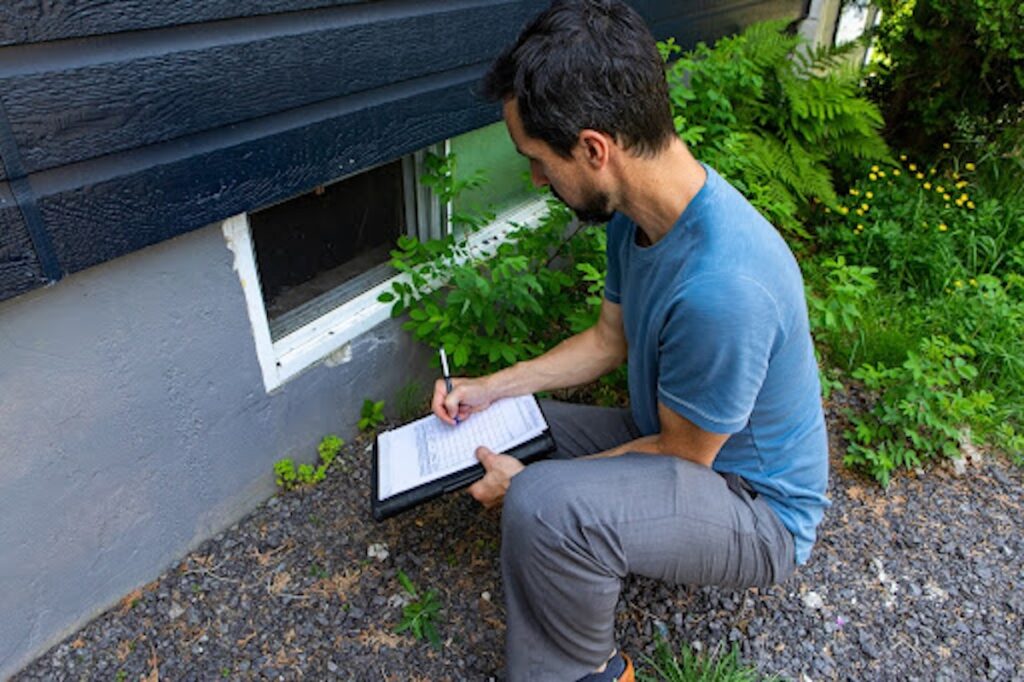
- Walk the perimeter of your building and note any areas where soil, mulch, or plants are in direct contact with the exterior
- Check whether you know when waterproofing was last applied or assessed — if you don’t know, that’s your answer
- Look for any early signs of moisture intrusion: staining, efflorescence, musty odors
- Consider pulling vegetation back from foundation areas and redirecting irrigation
If You Want a Professional Set of Eyes
These are exactly the kinds of issues that N.T.O.E.’s maintenance programs are built to catch. Our team walks your property with the knowledge of what to look for and the equipment to find what’s hiding inside the structure — before it becomes a repair project.
Whether you’re a homeowner protecting your investment, an HOA board managing shared infrastructure, or a property management firm overseeing a growing portfolio, proactive identification of these risks is far less costly than the alternative.
Call us at (888) 367-1371 or reach out online. We serve homeowners, HOA communities, and property management firms across Santa Monica, Beverly Hills, Brentwood, West LA, Westwood, and Pacific Palisades.